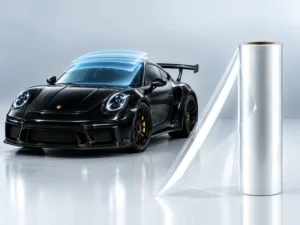
Installing windshield protection film requires proper glass preparation, accurate positioning, careful squeegee work and sufficient curing time. The film is applied to the exterior of the windshield, creating an additional protective layer against road debris, stone chips and surface scratches.
Unlike conventional interior window tint, exterior windshield protection film must withstand windshield wipers, changing weather and everyday road exposure.
In this guide, HOUDE explains the 8 essential steps for professional windshield protection film installation, common installation problems and important aftercare practices.
Tools and Materials Needed
Prepare the following before starting:
- Automotive glass cleaner and microfiber towels
- Manufacturer-recommended installation solution
- Clean spray bottles and purified water
- Professional film-safe squeegees
- Film measuring and cutting tools
- Glass preparation tools
- Clean, dust-controlled workspace
- Suitable lighting for final inspection
Installer Tip: Large or highly curved windshields may be easier to handle with two installers. Always use an installation solution compatible with the film’s adhesive.
How to Install Windshield Protection Film: 8 Steps
Step 1: Inspect the Windshield
Inspect the glass for chips, cracks, scratches and contamination before installation.
Identify ADAS cameras, rain sensors and other windshield-mounted equipment. Confirm that the glass is suitable for film application and that the selected film meets local requirements.
Windshield protection film does not repair existing structural glass damage.
Step 2: Clean and Prepare the Glass
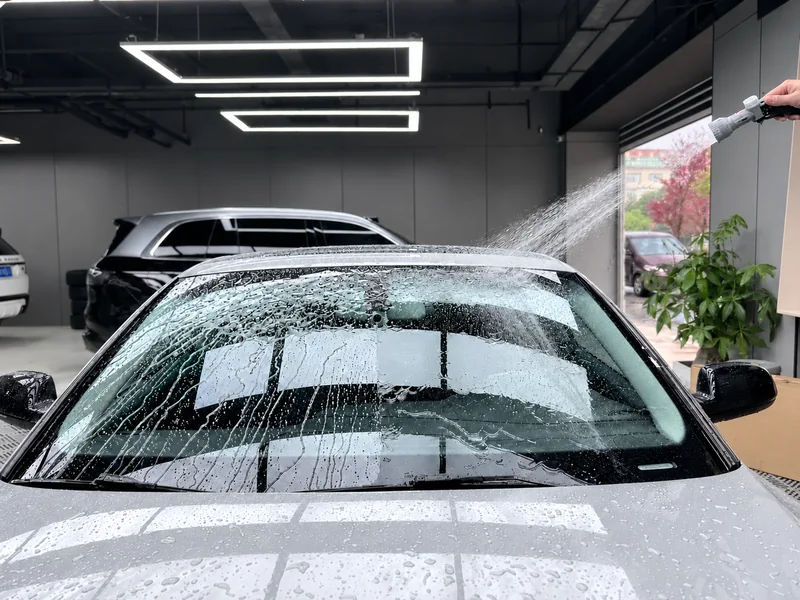
Thoroughly clean the exterior windshield to remove dust, grease, mineral deposits and road contamination.
Pay particular attention to the edges and the area around the windshield wipers.
Inspect the surface under good lighting. Any remaining particles may become trapped beneath the film and affect the final appearance.
A clean surface is essential for proper adhesion and optical clarity.
Step 3: Measure and Cut the Film
Measure the windshield and prepare the film according to its dimensions.
HOUDE windshield protection films are supplied in a standard 1.2 × 15 m roll format, suitable for professional cutting and application.
Keep the release liner in place until installation and avoid folding or creasing the film.
Use a suitable cutting pattern or protected cutting method to avoid damaging the glass.
Step 4: Apply the Installation Solution
Spray the recommended installation solution evenly onto the cleaned windshield.
Carefully remove the release liner and wet the adhesive side according to the product instructions.
The solution allows the film to be positioned before the adhesive develops its final bond.
Use the concentration specified for the selected film. Incorrect solution mixtures may affect positioning and adhesive performance.
Step 5: Position the Film
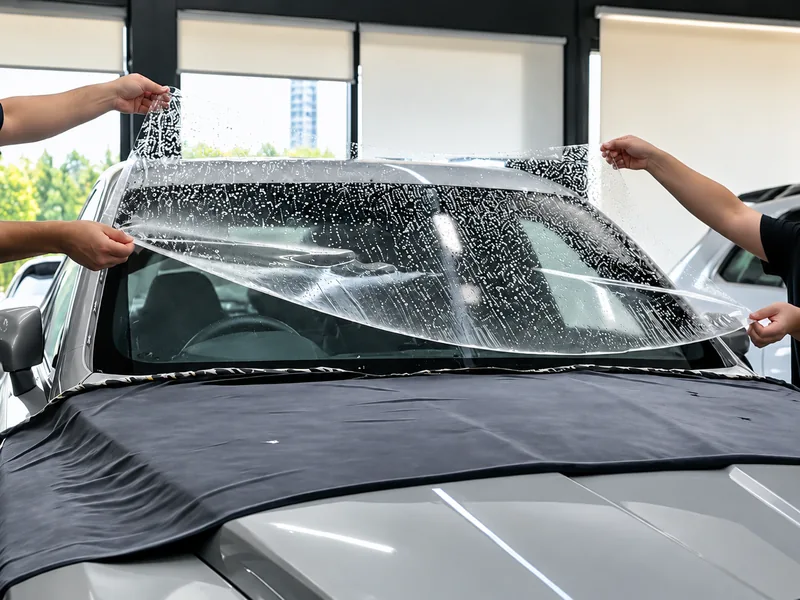
Place the film onto the wet exterior windshield and align it with the glass edges.
Adjust the position carefully before removing the application solution.
Avoid excessive stretching or uneven tension, which may create wrinkles or optical distortion.
HOUDE’s Windshield Protection Film is designed for exterior wet application without conventional heat shrinking.
Follow the installation requirements for the specific film and vehicle.
Step 6: Remove Water and Air
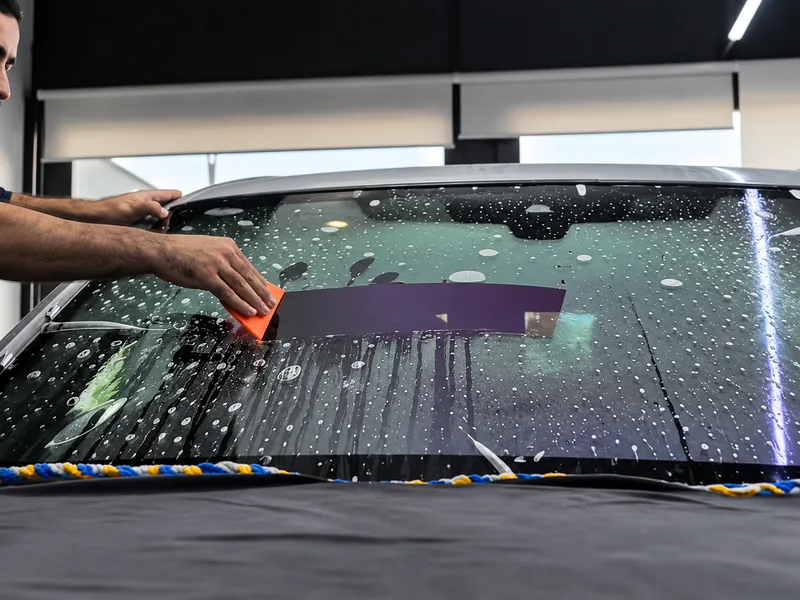
Using a professional squeegee, gradually remove trapped water and air from beneath the film.
Work from the central area toward the edges with controlled, overlapping passes.
Check for:
- Trapped air bubbles
- Dust or contamination
- Film wrinkles
- Uneven tension
- Excess moisture near the edges
Keep the film surface suitably protected and lubricated during squeegee work to avoid unnecessary scratches.
Step 7: Finish the Edges and Inspect
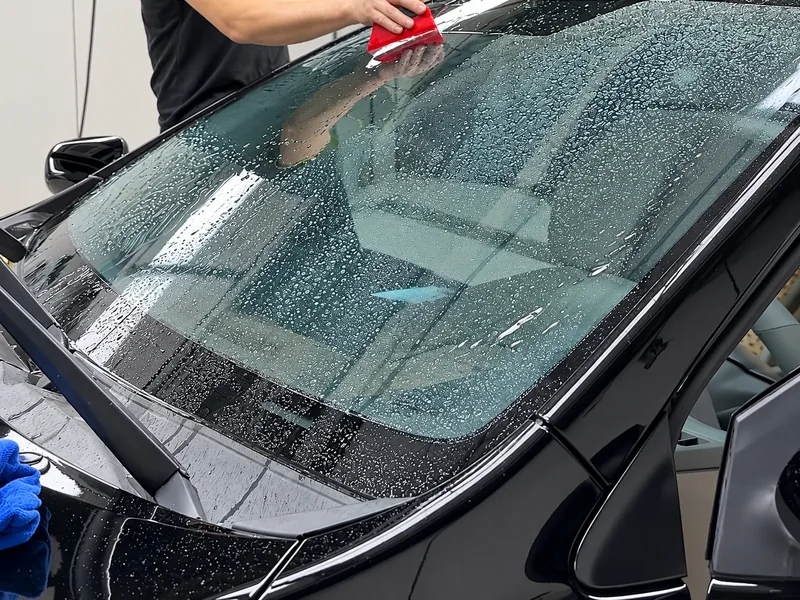
Trim the film carefully according to the approved installation pattern.
Check that the edges are properly positioned and free from visible lifting or contamination.
Inspect the finished windshield from both inside and outside the vehicle, paying attention to optical clarity, reflections and camera viewing areas.
Do not release a vehicle if the installation obstructs the driver’s view or introduces unacceptable optical distortion.
For additional industry context, the International Window Film Association’s inspection guidelines explain general principles of visual inspection and residual installation moisture for applied automotive window films. Exterior windshield protection films must still be evaluated according to their specific requirements.
Step 8: Allow the Film to Cure
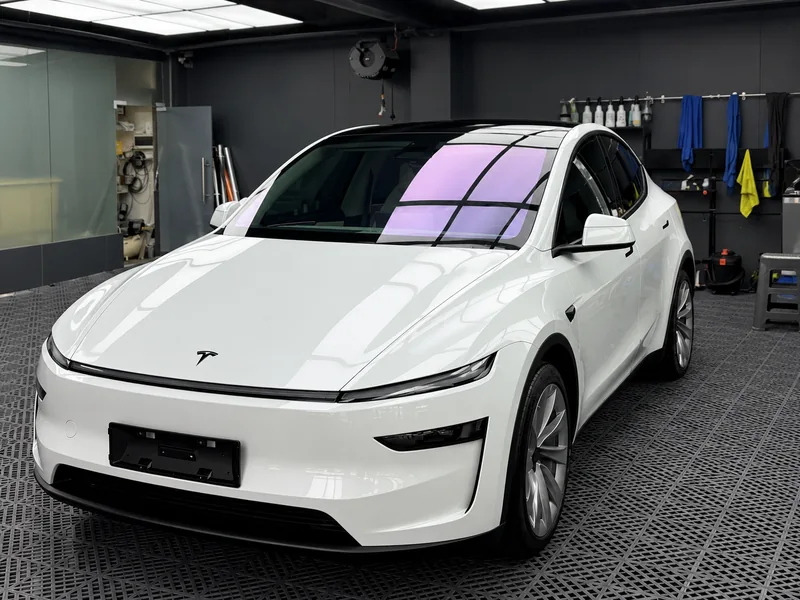
After installation, the adhesive needs time to bond with the glass.
HOUDE’s HD1685 installation guidance recommends allowing approximately 48–72 hours for initial curing.
During this period:
- Avoid washing the vehicle.
- Minimize windshield-wiper use when safe.
- Avoid unnecessary contact with the film.
- Follow the model-specific aftercare instructions.
Curing conditions may vary with temperature, humidity and installation methods. Safe driving visibility must always take priority.
Common Windshield Film Installation Problems
Even experienced installers can encounter problems. Most can be reduced through proper preparation and application techniques.
| Problem | Possible Cause | Recommended Action |
|---|---|---|
| Air bubbles | Trapped air or application solution | Improve squeegee technique |
| Dust particles | Inadequate glass cleaning | Improve surface preparation |
| Edge lifting | Contamination or uneven film tension | Check edge finishing |
| Optical distortion | Film stress or improper fitting | Review installation and film suitability |
| Surface scratches | Dirty tools or abrasive contact | Use clean, film-safe equipment |
A consistent installation checklist helps improve work quality and reduce material waste.
Important Considerations Before Installation
Optical Clarity and Legal Requirements
The film’s published visible light transmission (VLT) is not necessarily the same as the combined transmission of the film and existing windshield glass.
For U.S. applications, the National Highway Traffic Safety Administration’s FMVSS No. 205 guidance explains requirements relating to windshield glazing and visible light transmission.
Requirements vary by country, state, vehicle type and installation circumstances.
Installers should verify applicable regulations and evaluate the finished glass before offering a film for road use.
ADAS Camera Compatibility
Vehicles equipped with advanced driver assistance systems require additional attention.
Check the manufacturer’s requirements for windshield-mounted cameras and sensors. Avoid obstructing camera viewing areas and verify that the chosen film is appropriate for the vehicle.
A film’s transparency alone does not establish compatibility with every ADAS system.
Windshield Protection Film Installation FAQs
Can windshield protection film be installed without heat shrinking?
Yes. HOUDE’s HD1685 Ultra Clear model is designed for exterior wet application without conventional heat shrinking. Always follow the installation guidance for the selected model.
How long does windshield protection film take to cure?
HOUDE’s HD1685 guidance recommends approximately 48–72 hours for initial curing. Actual conditions depend on temperature, humidity and installation quality.
Can windshield protection film be installed over cracked glass?
Cracked or structurally damaged windshields should be professionally evaluated before installation. Protection film is not a substitute for glass repair or replacement.
Can the film be removed and replaced?
Yes. Professional installers can remove and replace windshield protection film using suitable methods. Removal procedures depend on the film, adhesive and glass condition.
Source Windshield Protection Film from HOUDE
HOUDE manufactures exterior windshield protection films for distributors, importers, automotive film brands and professional installers worldwide.
Our range includes HD1685 Ultra Clear, HD1686 Violet Light, HD1687 Phantom Rose and HD1688 Clear, offering different optical finishes and performance options for professional markets.
Explore our complete windshield protection film collection or contact HOUDE to discuss technical specifications, film samples and factory-direct wholesale supply.
Contact: orders@houde-films.com